Body Recomposition After 40: Why the Scale Lies (and What to Track Instead)
This article is for educational purposes and is not medical advice. Always consult a menopause-certified provider about your individual situation. Some links are affiliate links, and we may earn a small commission at no cost to you. We only recommend brands we’d send to our own sisters.
Body Recomposition After 40: Why the Scale Lies (and What to Track Instead)
You stepped on the scale this morning. The number was the same.
It has been the same, or worse, for months. Meanwhile you’ve been strength training. Eating more protein. Sleeping better. Your jeans fit differently. Your arms look different in a tank top. But the number won’t move, and the number is the number you were taught, at fifteen, was the only number that mattered.
The number is a liar. In perimenopause, it is an especially fluent one.
Let’s fix your instruments.
What the Scale Actually Measures
The bathroom scale measures your total mass. That’s it. It cannot tell the difference between:
• 3 pounds of water you’re holding because you ate salt last night
• 3 pounds of glycogen you refilled after a hard workout
• 3 pounds of muscle you built over four months
• 3 pounds of fat you lost over four months
If in the same month you gained 3 pounds of muscle and lost 3 pounds of fat, the scale reads identical. You look completely different. You are objectively healthier, stronger, and metabolically better off. The scale gives you a shrug.
Now do the math on why this feels so bad at 45. You are, quite possibly, doing everything right. And the instrument you were handed at fifteen is incapable of noticing.
Time for better instruments.
What Body Recomposition Actually Is
Recomposition, or “recomp” if you spend any time in this world, means changing the ratio of muscle to fat in your body, without necessarily changing your total weight.
The traditional advice is that you cannot build muscle and lose fat at the same time. That was mostly written by and for young men in caloric surplus or deficit, and it isn’t quite true even for them. For a woman over 40 who is undertrained, undereating protein, and returning to the basics with intention, recomp is not only possible; it’s the default result if you do the work.
The catch: it’s slower than fat loss alone, and invisible on the scale. That combination is the reason most women quit right before it starts working.
Why Perimenopause Makes This Harder (But Not Impossible)
Estrogen does more than run your cycle. It also:
• Helps you build and retain muscle
• Regulates where your body stores fat (favoring hips and thighs in your fertile years, favoring your midsection when it drops)
• Supports insulin sensitivity
• Modulates cortisol
As estrogen declines through perimenopause, you get less muscle-building support, more visceral fat storage, more insulin resistance, and higher baseline cortisol. This is why the same effort that used to produce results in your thirties now feels like pushing water uphill. It is not impossible. It’s just no longer automatic. You now need to be deliberate about the inputs your body used to give you for free.
Five levers. That’s the whole game.
The 5-Lever Protocol
Lever 1: Hit Your Protein Floor
This is the single biggest lever, and the one most women are underneath.
Target: 1 gram of protein per pound of your goal body weight. For most women 40+, that lands somewhere between 100 and 140 grams per day. If you weigh 165 and want to weigh 145, aim for 145 grams of protein.
Yes, it’s more than you think. Yes, you have to plan for it. No, you cannot get there on a salad and a handful of almonds.
Practical scaffolding:
• 30 to 40g protein at breakfast (this is non-negotiable and it’s the meal where you’re most under)
• 30 to 40g at lunch
• 30 to 40g at dinner
• One protein-forward snack if needed
Protein is what tells your body: keep the muscle, use the fat. Without it, a caloric deficit will eat your muscle first because muscle is metabolically expensive to maintain.
Lever 2: Progressive Overload Strength Training, 3x/Week
Cardio is not going to recomp you. Pilates alone is not going to recomp you. Walking, as much as we love it, is not going to recomp you.
You need to lift heavy things, and next month, you need to lift heavier things.
Three days a week. Compound movements: squat, hinge, push, pull, carry. Rep ranges of 5 to 12 for most working sets. Add weight or add reps every one to two weeks. That progression is the signal.
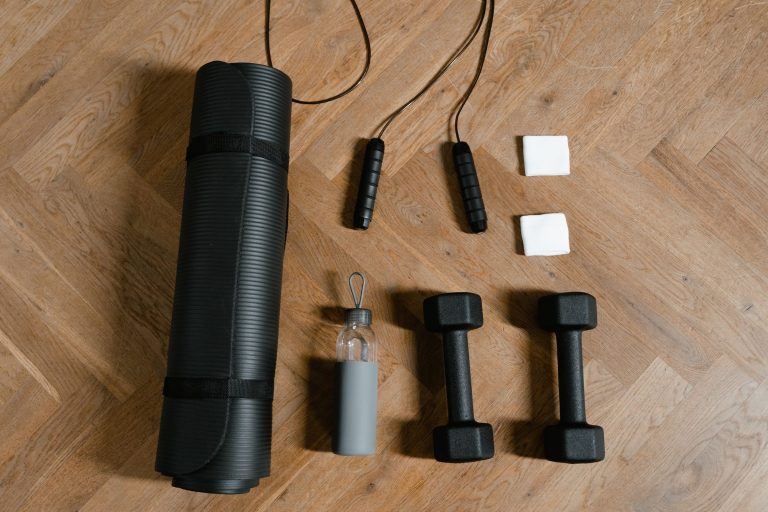
If this is new territory, we wrote the whole entry-level playbook in the muscle protocol for women over 40. Start there. You do not need a fancy gym. You need a barbell or a set of dumbbells and the willingness to be a beginner again.
You will not get bulky. This is the oldest lie in the industry. You will get dense: the same size or smaller, but harder, stronger, and metabolically active.
Lever 3: Zone 2 Cardio, 2 to 3x/Week
Zone 2 is the pace where you can hold a conversation but you’d rather not sing. Roughly 60 to 70% of your max heart rate. Brisk walk on an incline, easy bike, slow jog if that’s you.
30 to 45 minutes, 2 to 3 times a week. This is not the hard interval work you were told burns fat in your twenties. This is the boring, sustainable, mitochondria-building, fat-oxidizing work that your metabolism is starving for at 44.
You can do this in your neighborhood. You can do this on a walking pad while you take a call. You do not need to suffer for it to count.
Lever 4: Sleep Like Your Body Composition Depends On It (It Does)
One night of bad sleep drops insulin sensitivity by roughly 30%. A week of bad sleep raises cortisol, drops testosterone (yes, women need it), and increases hunger hormones. You cannot out-train a broken sleep pattern in perimenopause. You will only exhaust yourself trying.
If you are stuck at 3am staring at the ceiling, which is its own separate hormonal event, start there before you touch your workout program. Sleep is the platform every other lever stands on.
Lever 5: Regulate Stress, Or the Rest Doesn’t Land
Chronic elevated cortisol will store fat around your midsection, blunt your muscle-building signals, and quietly cannibalize the muscle you’re working to build. It is the reason some women train hard, eat clean, and still see the belly hold.
This is not a “just relax” problem. It’s a nervous-system-regulation problem, and there are actual physiological interventions for it. We walked through the ones with the best return in the cortisol belly piece. Pick one, do it daily.
You cannot recomp a body that thinks it’s being chased.
What to Track Instead of the Scale
Retire the scale for 12 weeks. Or throw it out entirely. A good number of the women we know did, and none of them regret it.
Track these instead:
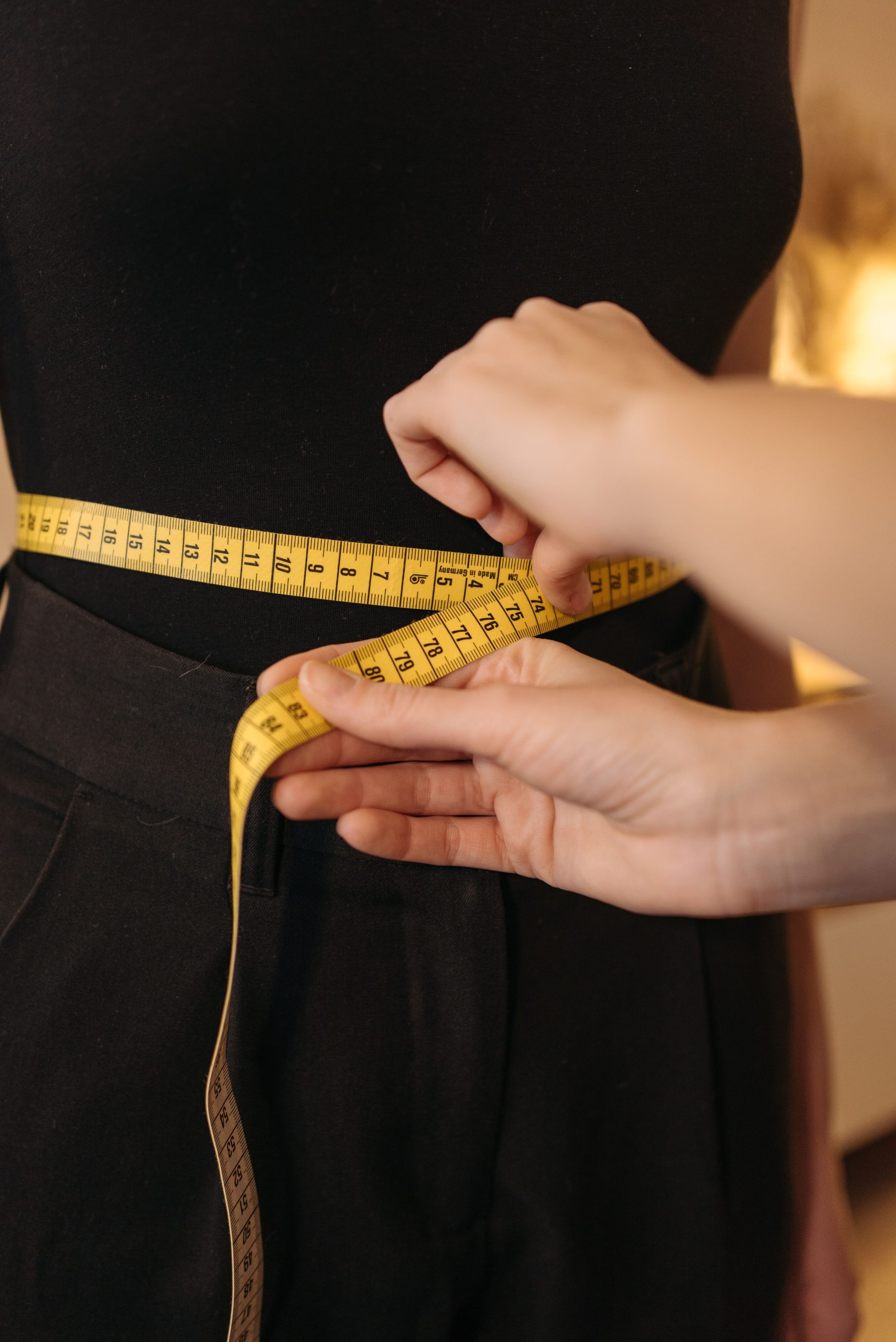
Waist-to-hip ratio. Measure the smallest part of your waist and the widest part of your hips. Divide waist by hips. Under 0.85 is the general health target for women. This ratio tells you where the fat is coming off, which, in perimenopause, is the metric that actually matters for long-term disease risk.
Strength PRs. Are you lifting more this month than last month? Even 5 more pounds on a deadlift, or one more rep at the same weight, is a signal that muscle is being built. Log it. Track lifts, not pounds of you.
How your clothes fit. Not vanity. Data. If the jeans that were tight three months ago are now loose in the thigh and snug in the seat, you are gaining muscle and losing fat. Congratulations, that’s recomp.
Energy through the day. Steady energy from 7am to 9pm without a 3pm crash is a metabolic report card. If your energy is smoothing out, your insulin sensitivity is likely improving.
Progress photos, monthly. Same lighting, same underwear, same time of day, same angle. The mirror lies day to day. Photos side by side across three months do not.
DEXA scan, if you can access one. A DEXA gives you actual muscle mass, actual fat mass, and actual visceral fat. Cost is typically $100 to $200 and worth it once or twice a year to calibrate. This is the gold standard.
Smart scale as a secondary check, if you must have a scale. The bioimpedance readings are directional at best, but if you’re going to weigh yourself, at least look at the muscle mass and body fat trends over 8 weeks, not the total weight day to day.
What Progress Actually Looks Like
Weeks 1 to 4: The scale probably doesn’t move. You feel stronger. You sleep a little better. Nothing visible.
Weeks 4 to 8: Clothes start to fit differently. Waist measurement drops half an inch. Lifts go up. Scale still stubborn.
Weeks 8 to 12: A shoulder appears. A jaw appears. The waist-to-hip ratio has meaningfully shifted. The scale may finally move down 2 to 4 pounds, or it may go up because you built real muscle, and you will not care, because you can see what’s happening.
Weeks 12 to 24: This is the version of your body you didn’t think was still available to you.
Give it the runway. This is the work of a year, not a month, and it compounds.
The Real Point
The scale is a nineteenth-century instrument being used to measure a twenty-first-century body going through a hormonal transition it was never designed to notice.
You are not failing the scale. The scale is failing you.
Trade it in for a tape measure, a barbell, a camera, and a longer time horizon. Then get back to the work.
You are not losing weight. You are building the woman who walks into the next twenty years.
Defined by fire. Measured accordingly.
───
Join the ARDVI fire. Weekly notes on perimenopause, style, and living powerfully in your second act, sent to your inbox, no fluff, no shame. Sign up at ardvi.life.
The ARDVI Team